
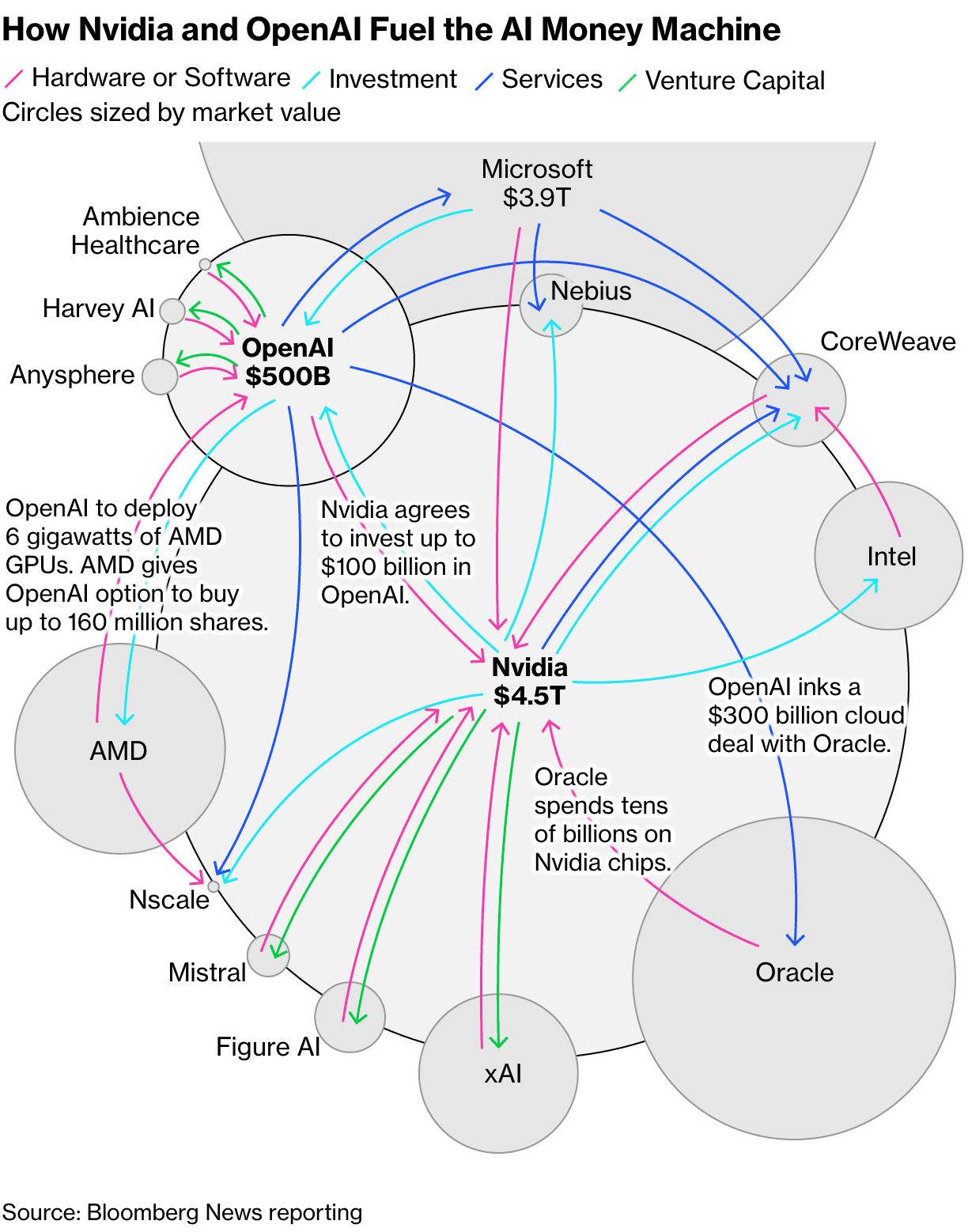
Access to capital and the demand for advanced technology are creating a complex web of financial relationships within the artificial intelligence sector. Recent deals, such as Nvidia's multi-billion dollar investments in companies like OpenAI and CoreWeave, highlight a growing trend of circular financing. In these arrangements, a company provides capital to a customer or partner, which is then used to purchase its own products or services.
This practice sits on a spectrum between legitimate vendor finance and potentially risky round-tripping. Understanding this distinction is critical for assessing the true health and sustainability of the AI industry's growth. Vendor financing is a long-established practice where a manufacturer extends credit to a customer to facilitate a purchase. General Motors, for example, operates a captive financing arm to help customers buy its vehicles. The transaction is straightforward. The customer receives a product they need, and the manufacturer secures a sale. The funding is directly tied to a specific asset sale.
In the AI sector, Nvidia's deals often resemble this model. The company takes an equity stake in a partner, such as its up to $100 billion commitment to OpenAI. OpenAI then uses that capital to purchase Nvidia's GPUs for its data centers. This is a direct method for Nvidia to support its customers' growth, which in turn drives its own revenue. The capital is used for the specific, tangible purpose of buying essential hardware. However, the scale and interconnectedness of these deals have drawn comparisons to round-tripping. Round-tripping is a financial practice where money is invested in a company with the implicit understanding that the funds will be used to buy products from the investor. This circular flow can create the appearance of organic demand and revenue growth, masking the fact the investor is indirectly funding its own sales.
The risk is that such arrangements can artificially inflate revenue metrics, potentially misleading investors who do not scrutinize the source of growth. Historical precedents from the dot-com bubble serve as a caution. Companies like Lucent Technologies aggressively lent money to customers to buy its telecom equipment, booking the loans as revenue. When the bubble burst and these customers failed, Lucent's sales collapsed, leading to its eventual sale.
The current AI ecosystem features a dense network of similar financial arrangements. Beyond the Nvidia-OpenAI deal, Nvidia holds a 7% position in cloud provider CoreWeave, which then uses debt—collateralized by Nvidia chips—to buy more Nvidia chips. A similar pattern emerges with Nvidia's investment in xAI, which will deploy the funds on Nvidia's Blackwell chips.
The critical question is whether these deals represent productive vendor finance or deceptive round-tripping. The evidence currently points more toward vendor finance for several key reasons. First, the transactions involve the exchange of real, high-demand goods. Nvidia's H100 and Blackwell GPUs are not fictional products. They are the fundamental engines of the AI revolution, with verified demand from thousands of enterprises. The revenue booked from these sales represents a transfer of a critical asset, not a paper swap.
Second, the companies involved are large and subject to significant scrutiny. Nvidia is a public company with stringent disclosure requirements. Its revenue streams and investment activities are transparently reported, allowing analysts to assess the quality of its earnings. The primary risk in these circular deals is not necessarily fraud, but heightened systemic risk and leverage. By investing heavily in its own customers, Nvidia effectively doubles down on the AI sector. Its fortunes are now tied not only to product demand but also to the equity performance and financial health of its partners. If a major partner like OpenAI were to fail, Nvidia would face the dual loss of a key customer and a significant equity investment.
This creates a leveraged bet on the AI industry. Nvidia's business is already concentrated in data center sales for AI. These investments further concentrate its exposure. The same interconnectedness applies across the ecosystem, linking the fate of chipmakers, cloud providers, and AI model developers.
For the tech and finance industries, the focus should be on counterparty risk and capital allocation. These deals are a rational response for a company like Nvidia, which possesses a lower cost of capital, to fund its capital-constrained customers. It accelerates industry growth. However, it also builds correlations, making the entire sector more vulnerable to a unified downturn.
The ultimate test for the AI sector will be the transition to sustainable profitability. Vendor financing is only sustainable if it bridges a gap until a company's revenue from external customers can independently support its operations. Companies like OpenAI must convert their technological advances into profitable business models, generating sufficient cash flow from end-users to fund their own infrastructure needs. If the circular flow of capital remains largely internal, without a clear path to standalone profitability, the financial model may prove fragile. For now, these deals are a powerful form of vendor finance, but they demand careful monitoring for the systemic dependencies they create and the underlying progress toward genuine financial self-sufficiency.